

Services · 04
Nature-based Solutions (LTPBR)
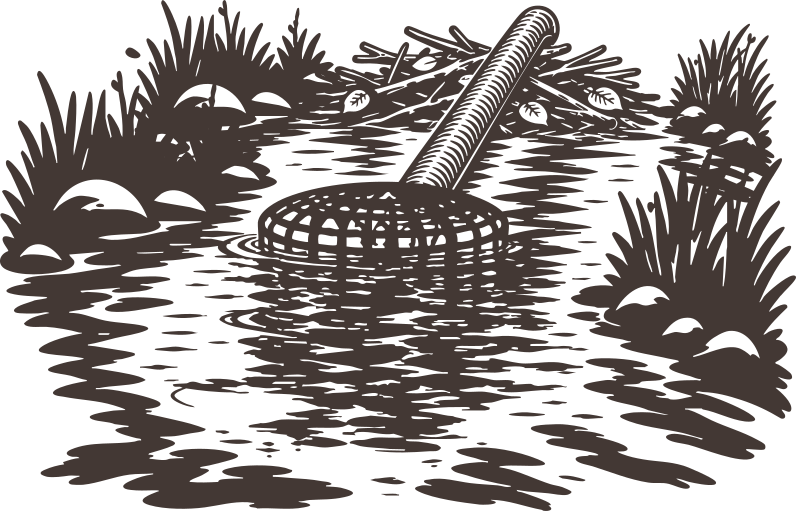
Beaver dam analogues, post-assisted log structures and revegetation. We build what a beaver would build, slow the water down, and let the creek do the rest.
The problem
A straightened creek is a drain.
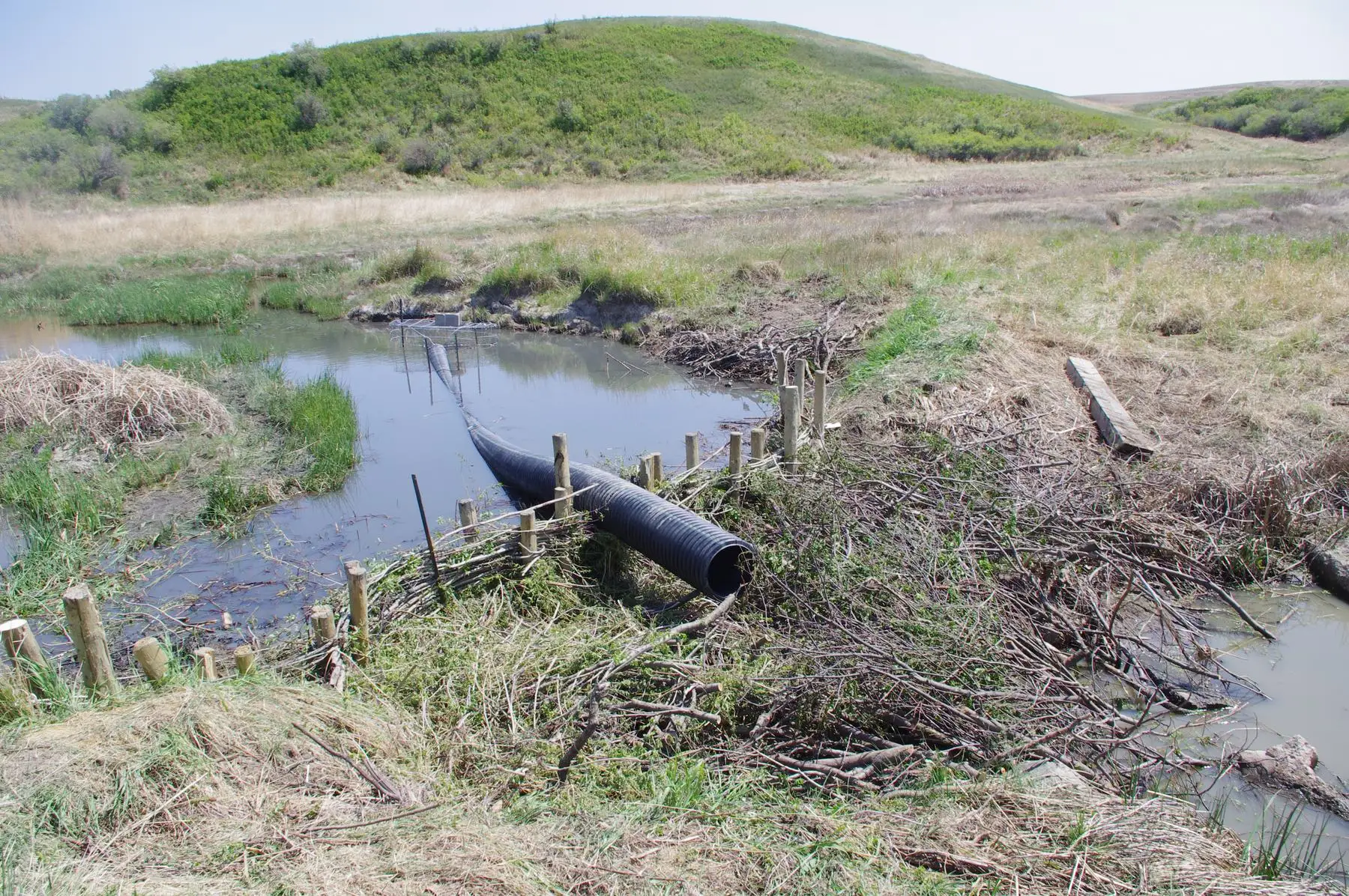
Cut off from its floodplain, a creek runs fast, cuts down and dries out the land on either side. Beavers used to fix that for free. Where they're gone, someone has to put the first dam back.
So we build it by hand, out of posts and willow, and wait for the beavers.
What we build
Posts, willow and patience.
Beaver dam analogues
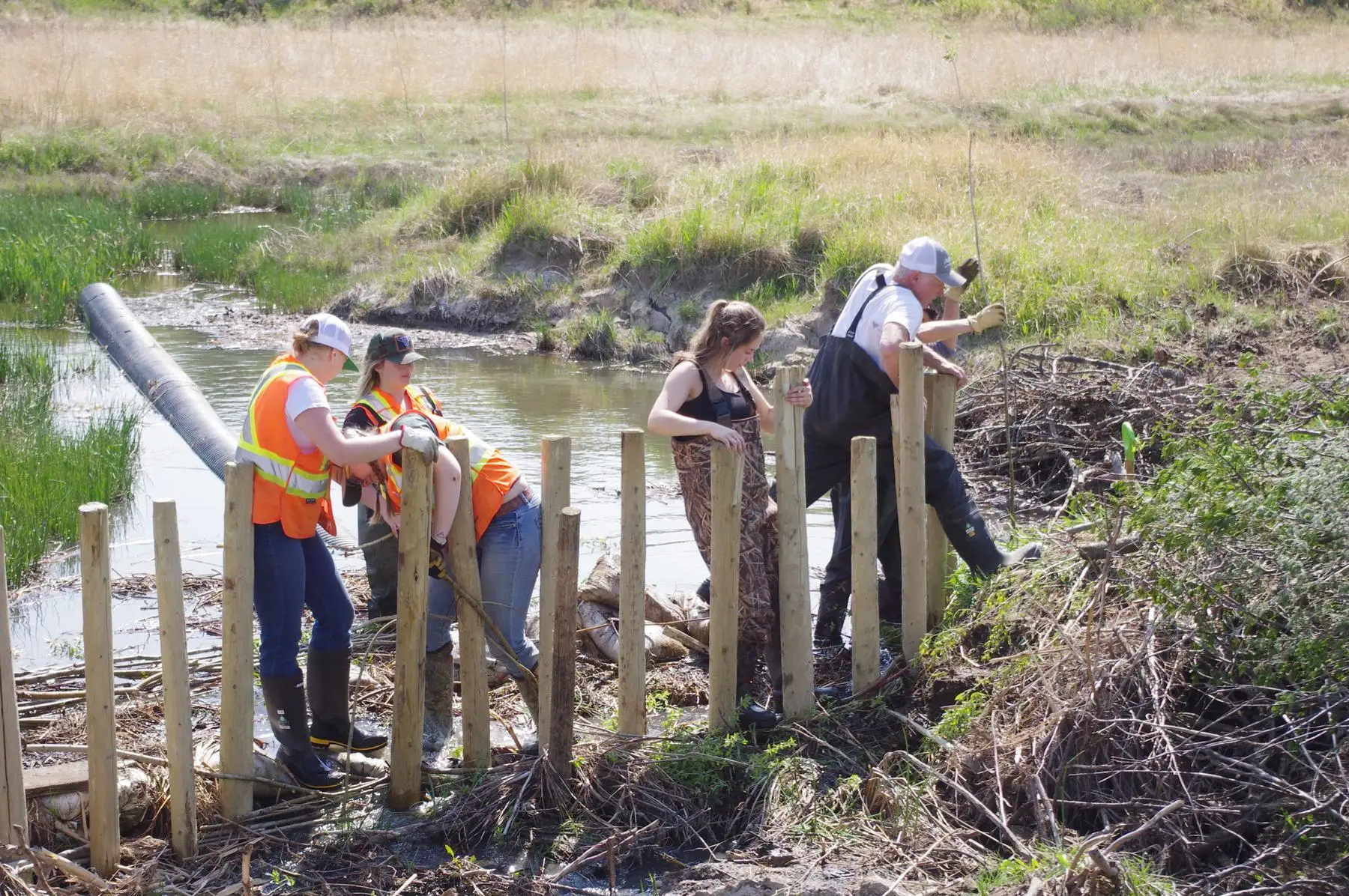
A line of posts across the creek, woven with willow and branches. It ponds water, catches sediment and gives a beaver somewhere to start.
Post-assisted log structures
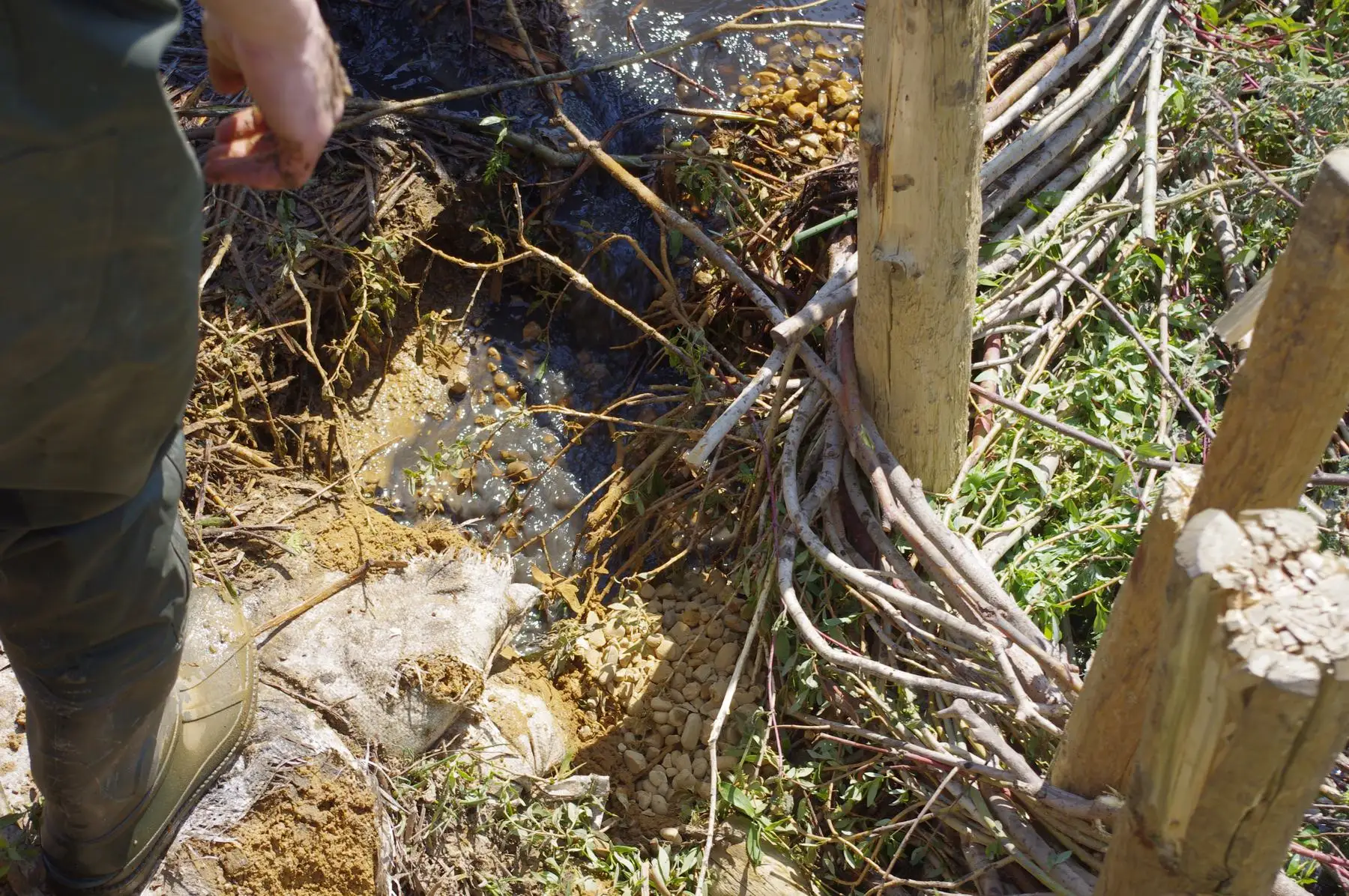
Logs and branches pinned to posts along the bank. Slows the current, roughs up the channel and gives the creek its bends back.
Revegetation
Willow stakes and native shrubs along the banks. Roots hold the soil, shade cools the water, and the beavers get something to eat that isn’t your shelterbelt.
Peeled, untreated
The posts are ours too.
Cut for beaver dam analogues and post-assisted log structures. Hand-peeled, untreated, nothing in the creek that shouldn't be. Available to other crews. Ask us for pricing and lead times.

Peeled, untreated
Dam Good Posts
Hand-peeled untreated posts cut for beaver dam analogues and post-assisted log structures. No chemicals in the creek, ever.
The way she goes
From first call to final check-in.
No surprises. Every step has a name, a date and a person you can call.
- 01
Site visit
We read the creek: where it's cutting down, where the floodplain is, where beavers could live.
- 02
Written plan
Structure count, locations, post and willow supply, and what to expect in year one and year three.
- 03
Build
Posts driven by hand, woven with willow and branches. A crew and a few days.
- 04
Monitor
We come back to measure sediment, water and willow, and to see who moved in.
Why nature-based
Slow water is stored water.
Water security
A creek that stays wet into August is a creek with beaver dams on it. Analogues get you there while the beavers find their way back.
Cheaper than concrete
Posts, willow and a crew. No engineering drawings, no heavy equipment, no concrete in the creek.
Climate resilience
Ponds buffer drought and soften flood peaks. The more of them a watershed has, the softer the landing.
Built to be taken over
The structures are meant to catch sediment, grow willow and get adopted by beavers. Ours stop being ours.
In the field
Posts in, willow woven, beavers pending.
Build days and what the structures look like a season on.
- Beaver dam analoguePosts, willow and a pond leveller through the structure, working together.
- Build dayDriving posts across the creek.
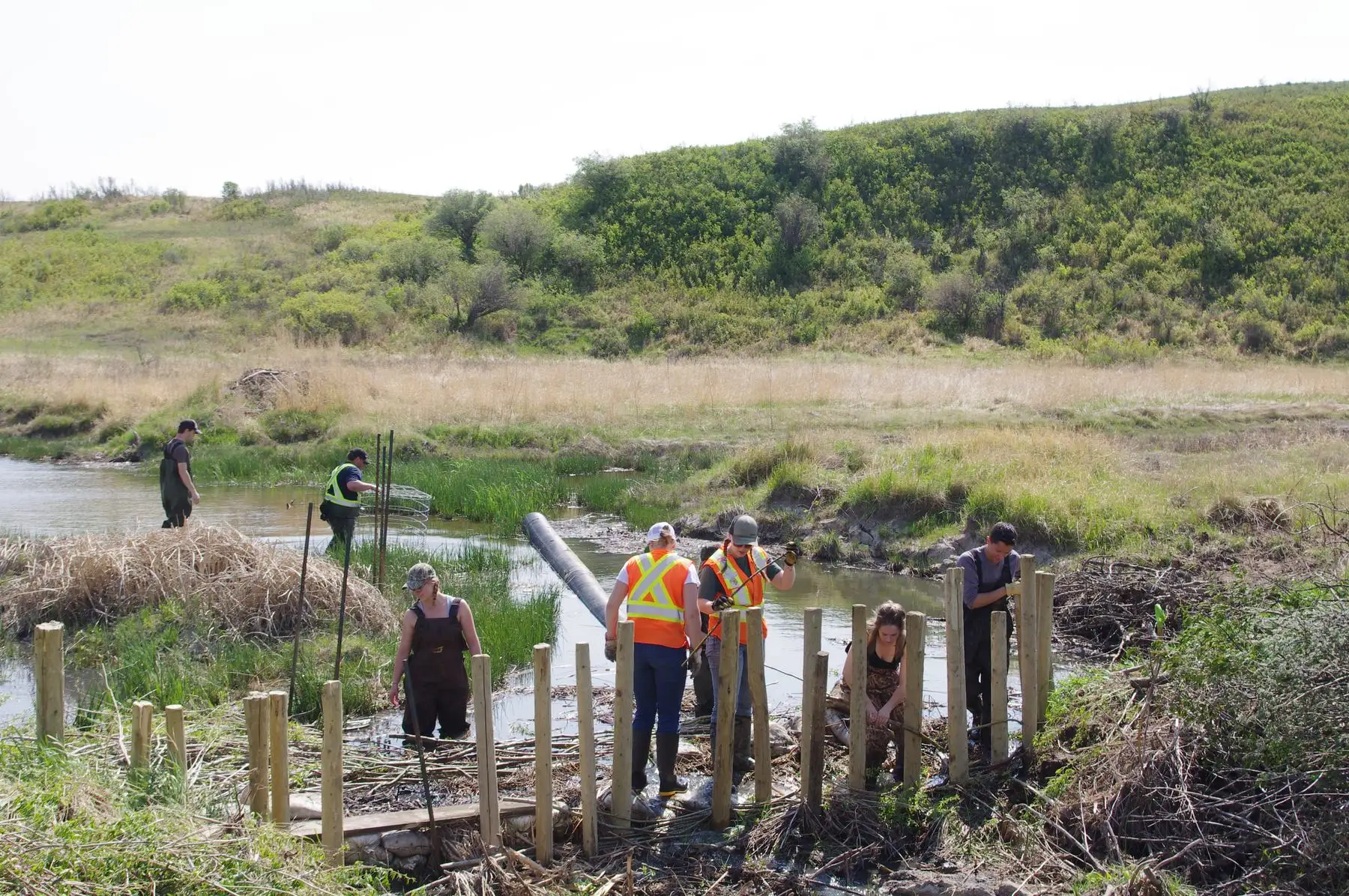 Build dayA line of posts, a crew in the creek, and a coulee behind.
- Up closeWillow and branches woven through the posts. The beavers take it from here.
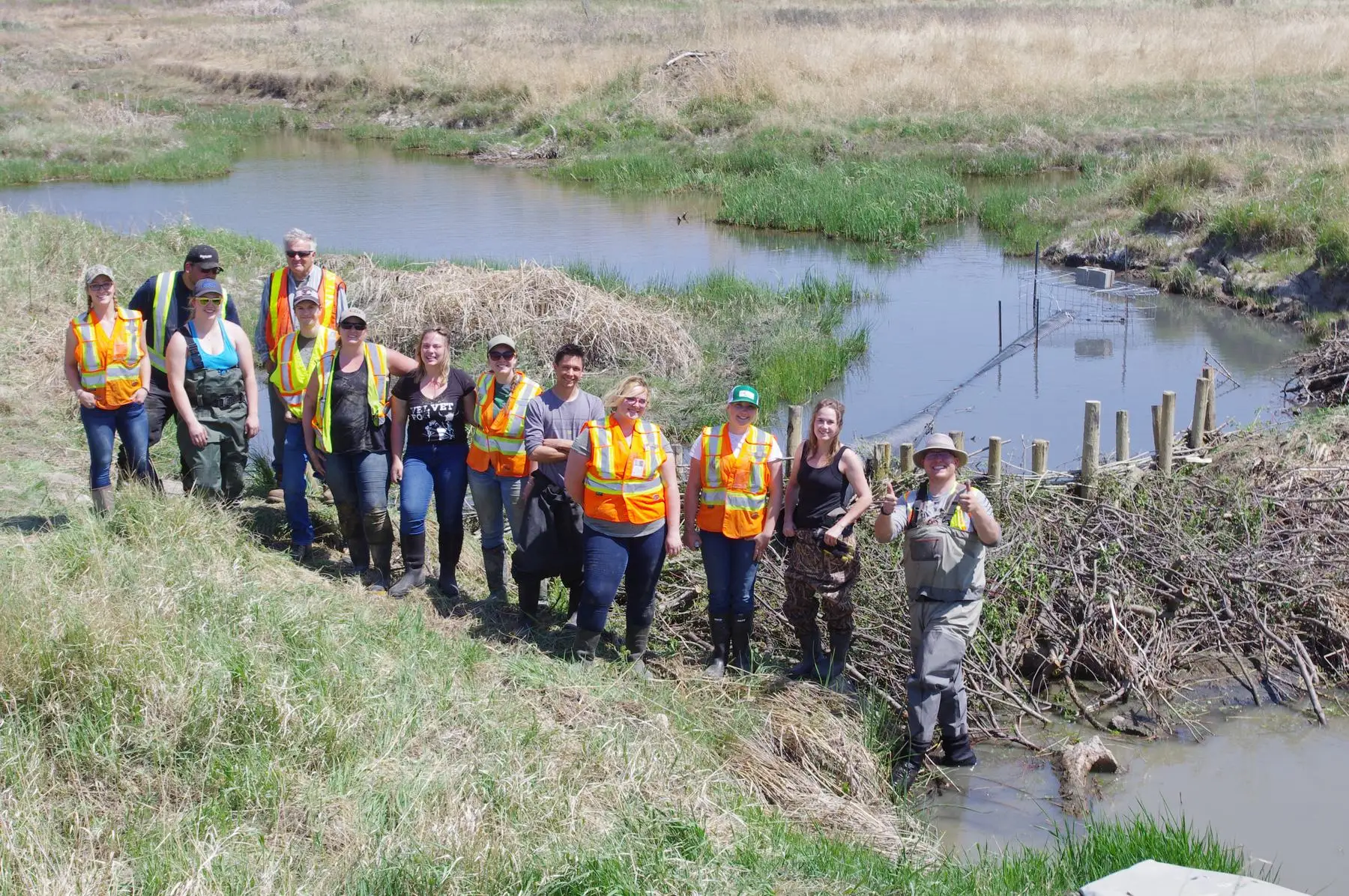 Build dayThe crew and the finished structure.
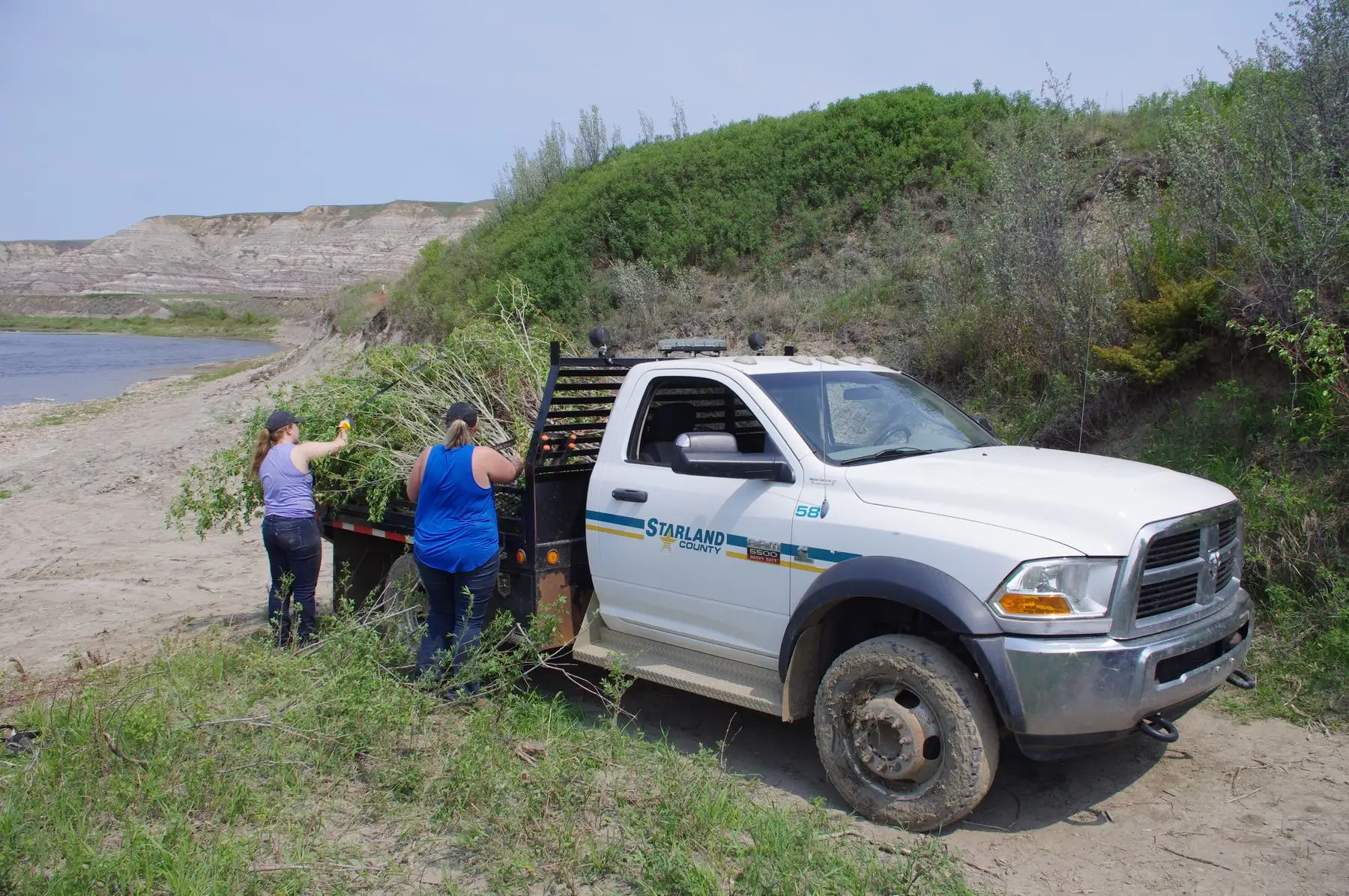
- Starland CountyA truckload of willow cuttings for the weave.
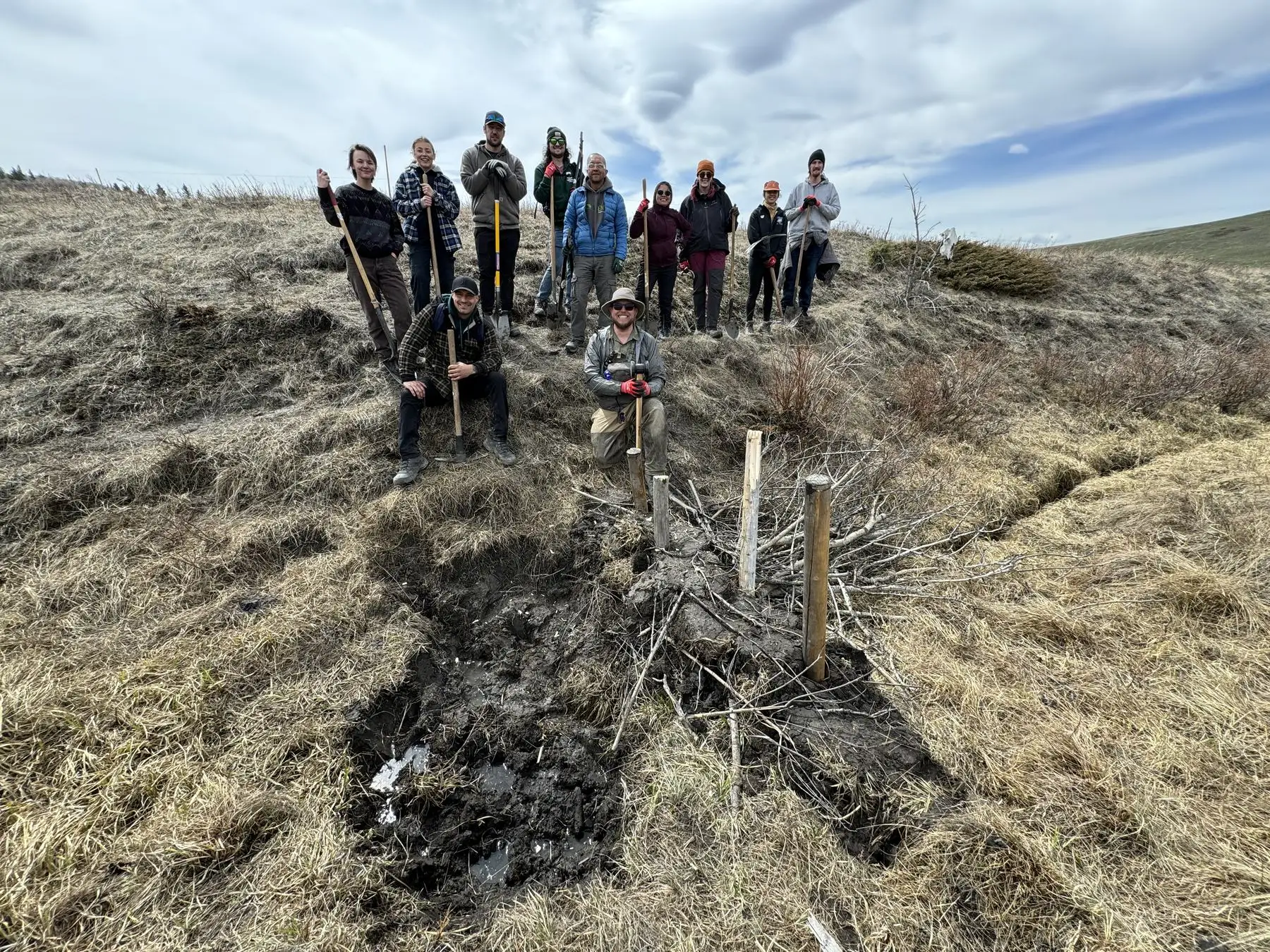 Lethbridge PolytechnicApplied Wetland and Stream Management field trip, at a beaver dam analogue.
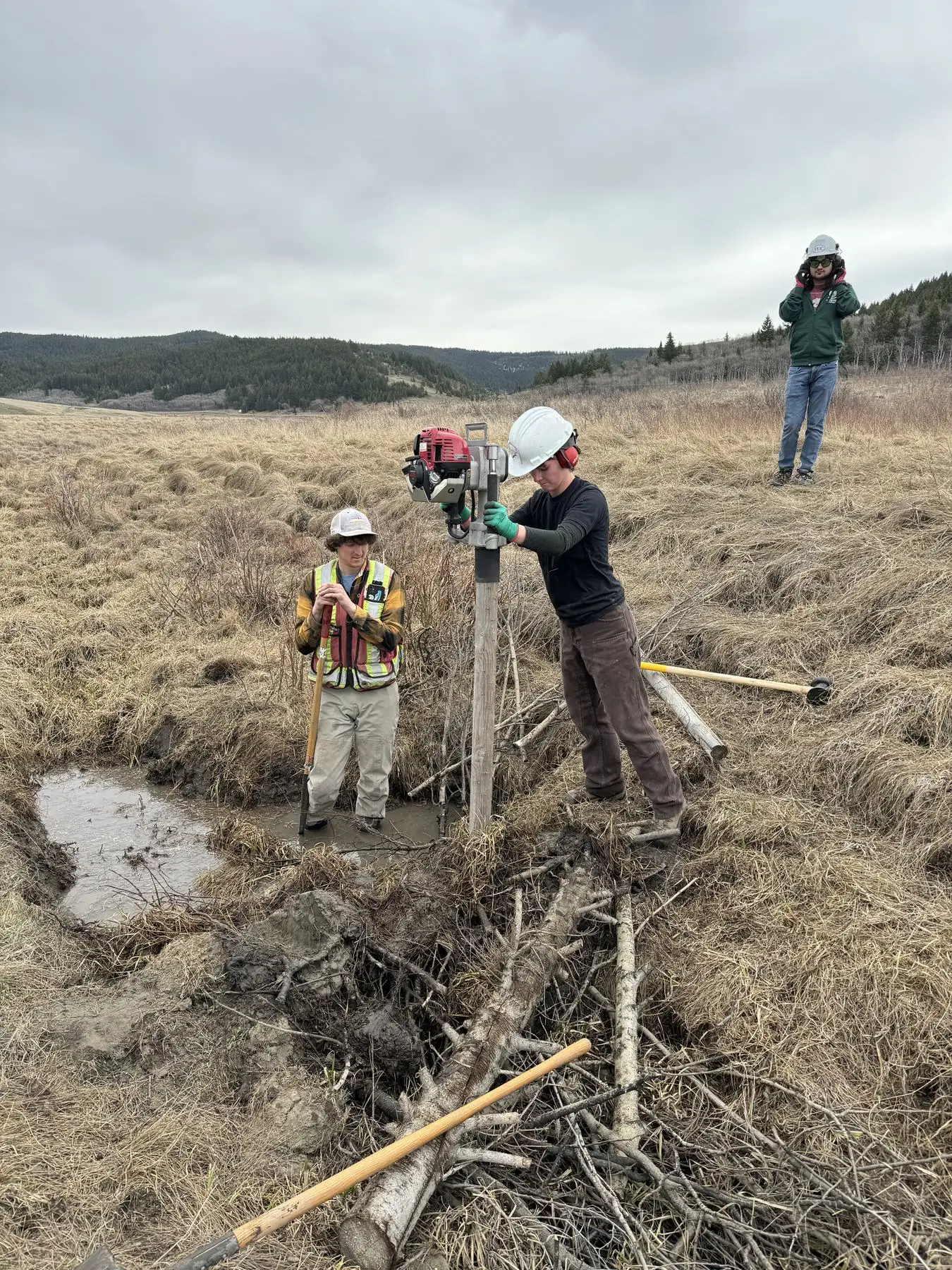 Postless BDAPostless no more. A crew adding posts to an older structure.
FAQ
Questions we get a lot.
Do I need beavers for this to work?
No. Starland County had none in 2019 and the structures worked anyway. Beavers make it better and cheaper, and they usually show up.
Do I need a permit?
Often. Anything built in a watercourse can need approval, and the rules differ by province. We sort out what applies as part of the plan.
Where do the posts come from?
Our own Dam Good Posts: hand-peeled, untreated, cut for beaver dam analogues and post-assisted log structures. No chemicals in the creek.
Do you work outside Alberta?
Yes. We work anywhere in Canada. Travel is itemized in the plan, so you can see what a site visit costs before you book one.