


Services · 01
Beaver flood prevention
Pond levellers, fence-and-pipe systems and culvert exclusion fences. Installed once, checked on a schedule, and the dam stays exactly where the beavers built it, with the water at the level we want it.
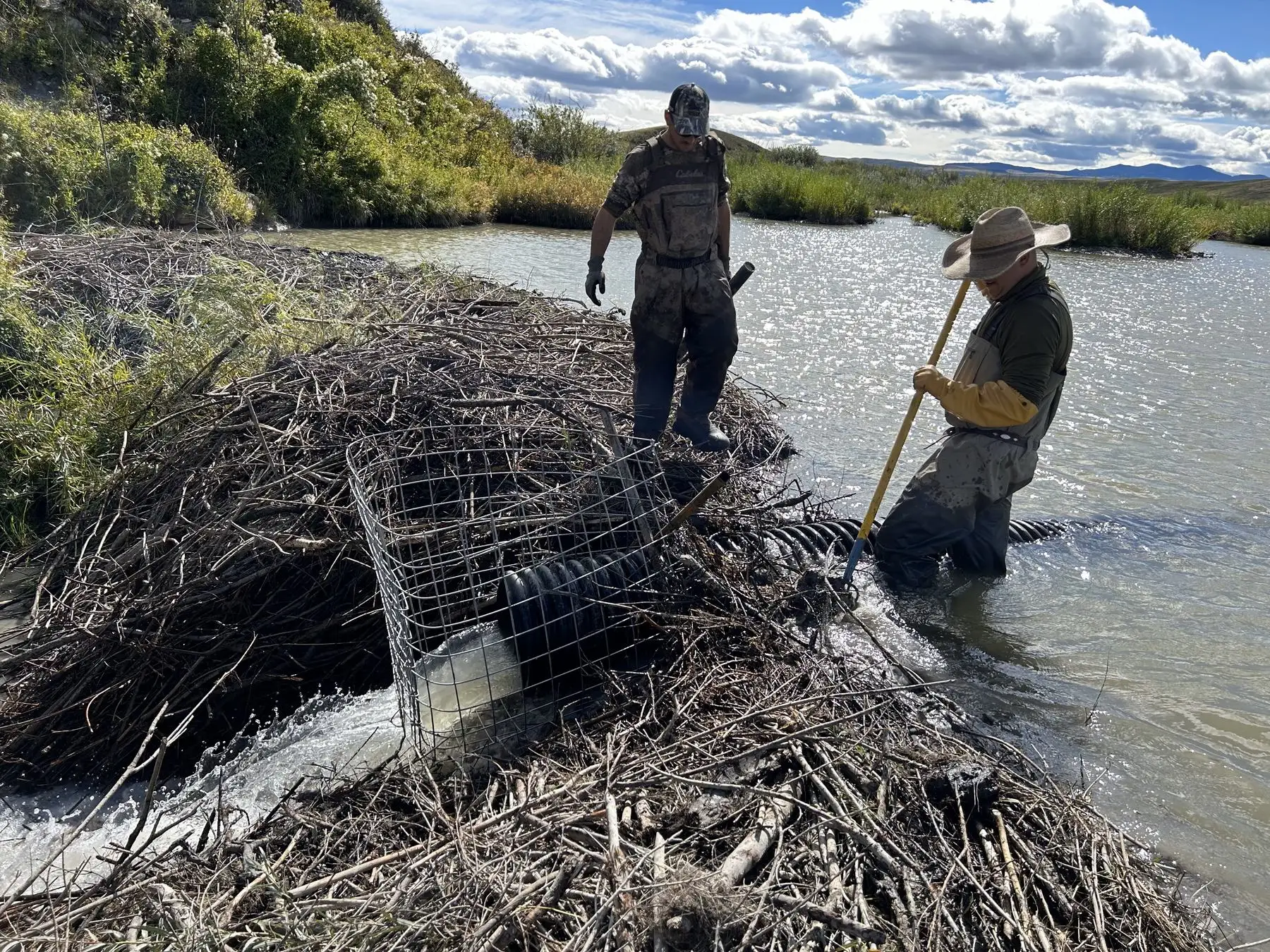
The problem
Beavers don't want to flood your road.
They want to maintain a pond. A plugged culvert or a dam in the wrong spot is a beaver doing its job a little too well. Tear the dam out and they rebuild it, usually within the week, usually bigger.
So we don't fight the beaver. We set the water level and let them keep the pond.
How it works
Our flagship: the pond leveller.
Tap the numbers. The whole idea fits in one sentence: move the water somewhere the beavers can't hear it.
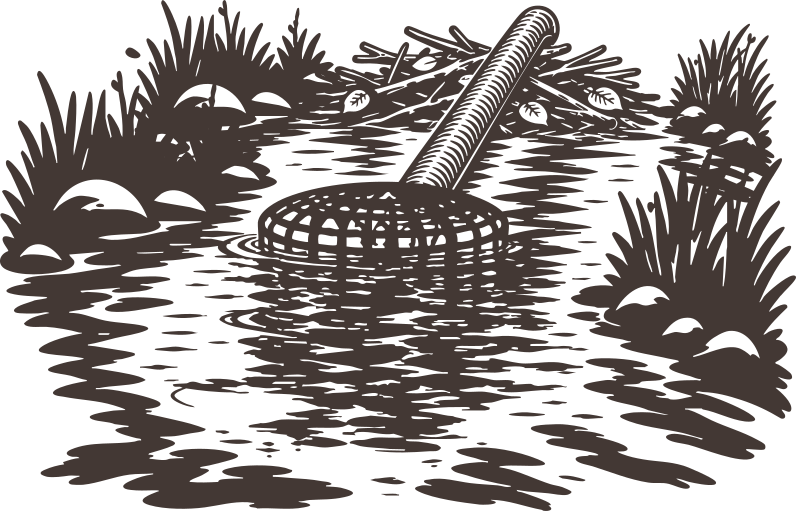
Part 1 of 4
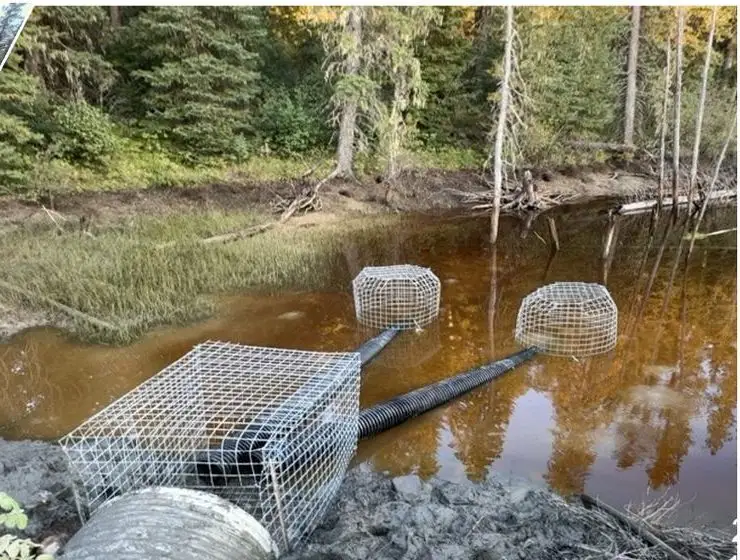
Intake cage
A wire cage anchored on the pond bottom, well away from the dam. Beavers find leaks by the sound and feel of moving water. Out here, there is nothing for them to plug.
Part 2 of 4
Flow pipe
A rigid pipe runs from the cage, through the dam, to the downstream side. Water moves through it quietly, below the surface, with no current for a beaver to notice.
Part 3 of 4
The dam stays
The dam is notched by hand and the pond leveller inserted. The beavers keep building and patching it the way they always have, and the pond they're guarding stays put.
Part 4 of 4
Set pond level
We pick a level that keeps the wetland working, the road or field dry, or the culvert flowing. Then we check it through the seasons and maintain as needed.
Three tools
Which one depends on the water.
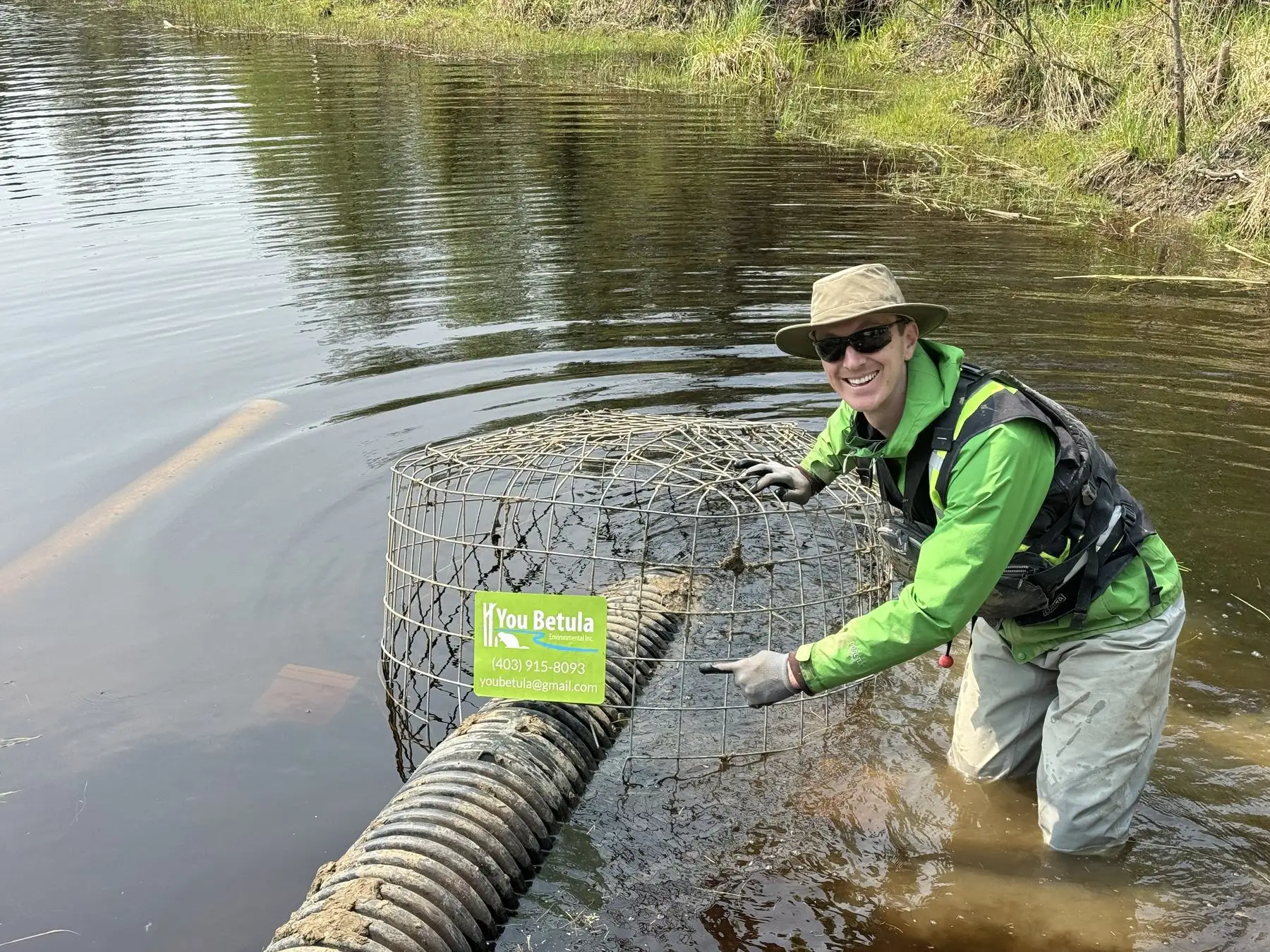
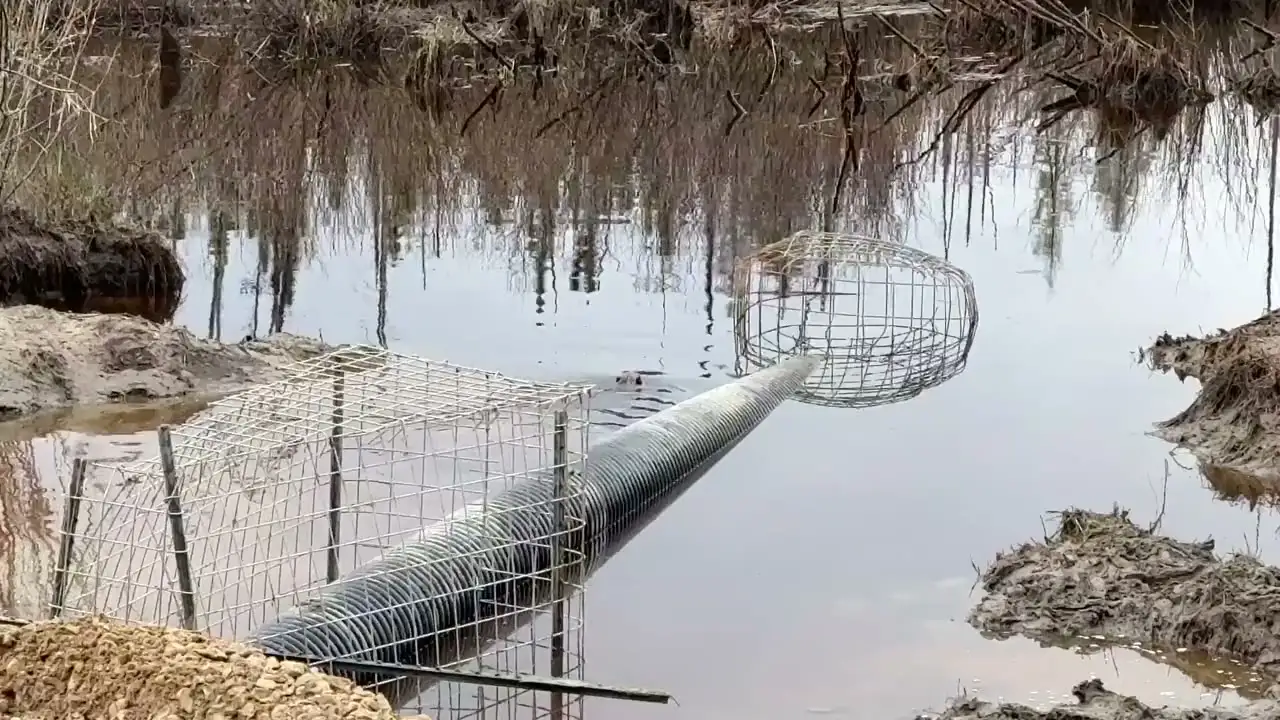
Pond leveller
The flagship. A caged intake in open water and a pipe through the dam. Holds the pond at the height we set.
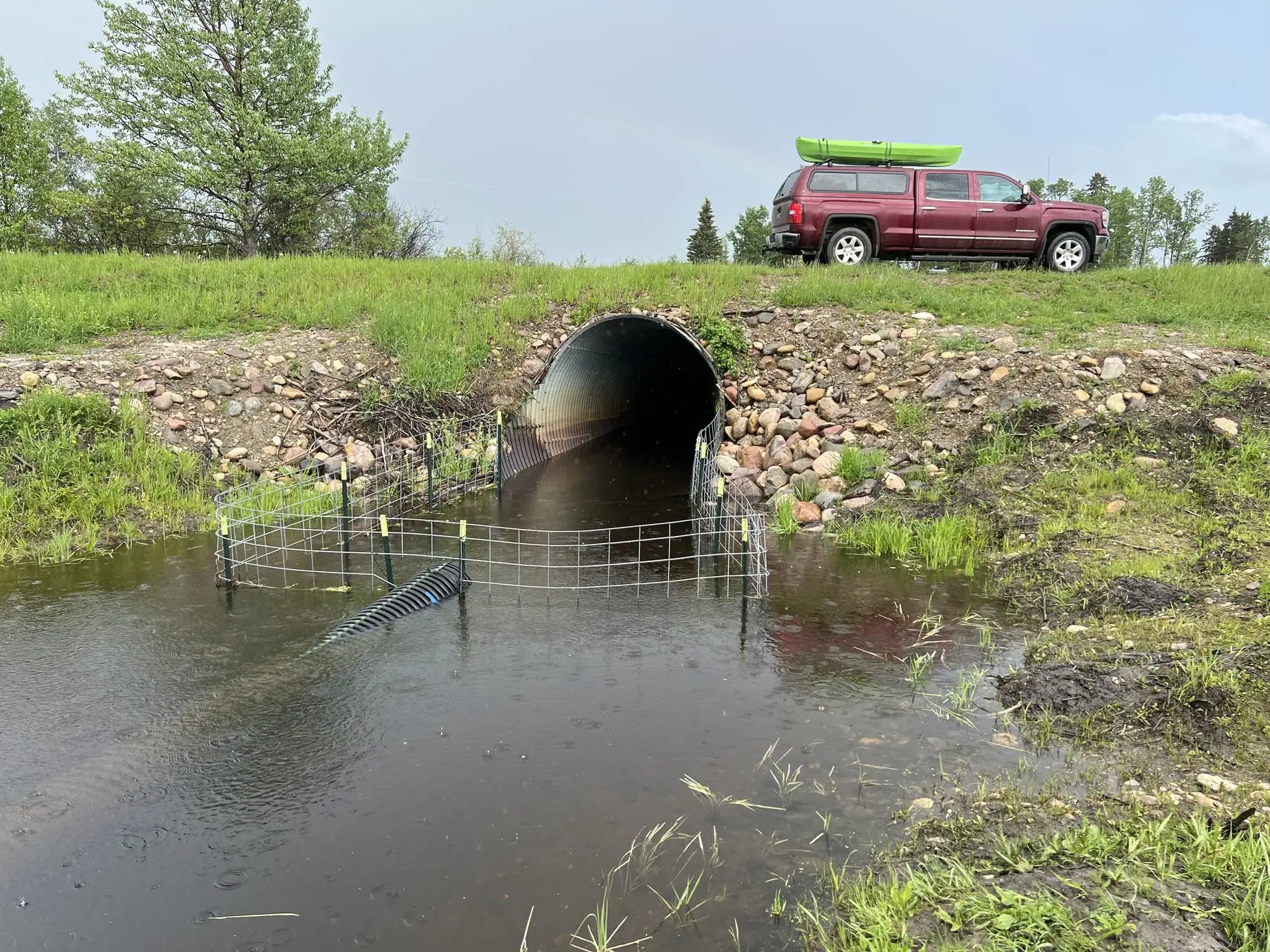
Fence-and-pipe system
For culverts and dams that need both a fence to keep the beavers off and a pipe to keep the water moving.
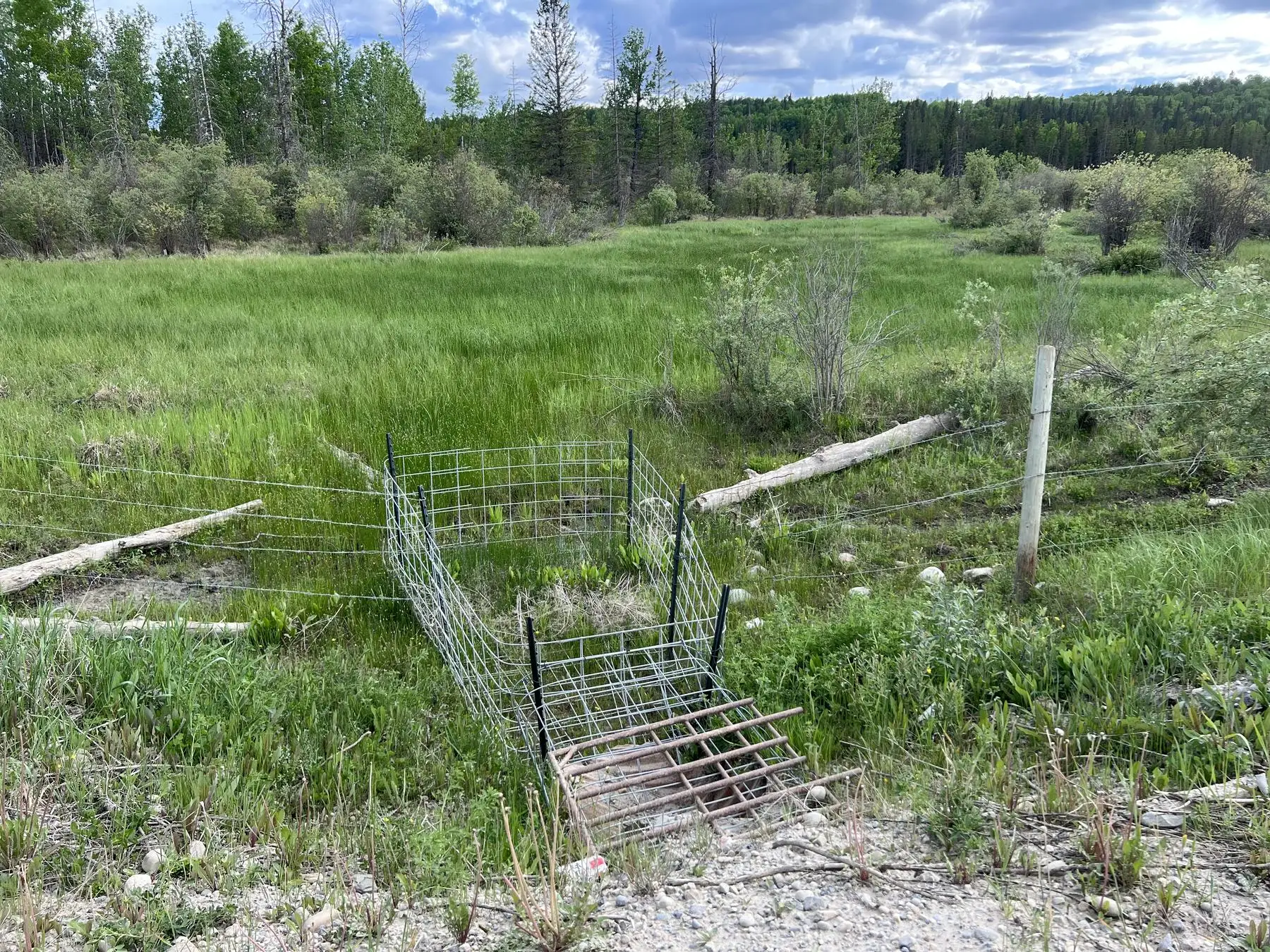
Culvert exclusion fence
A trapezoidal fence upstream of a culvert. The beavers dam the fence, not the culvert, and the road stays dry.
Before and after
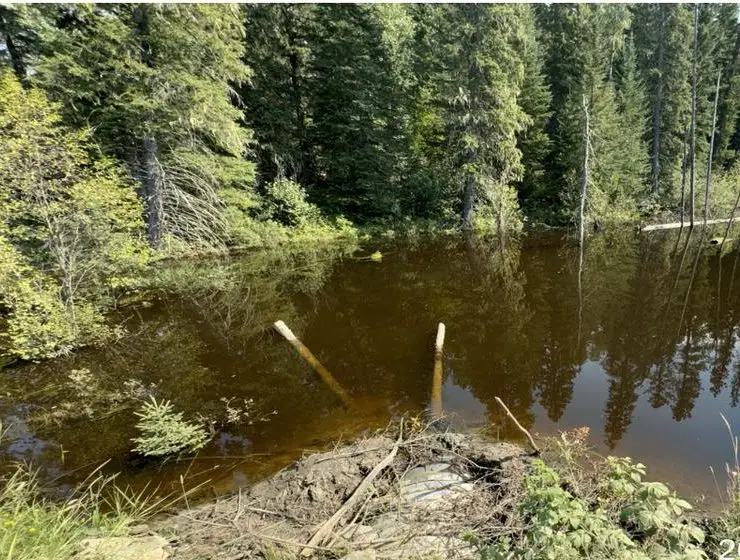
Nordegg culvert.
Same culvert, one season apart. Drag the handle, or use the arrow keys, to compare.
The way she goes
From first call to final check-in.
No surprises. Every step has a name, a date and a person you can call.
- 01
Site assessment
We walk the site, find the dam or crossing causing trouble and measure the water.
- 02
Written plan
Options, costs and trade-offs, spelled out in plain language.
- 03
Install
We build it with our own crew and materials, and test it before we leave.
- 04
Monitor
We come back to check levels and adjust through the seasons.
Why a leveller
Work with the water, not against it.
Cheaper than round two
Tearing out a dam buys you a few weeks. The beavers rebuild. A leveller solves it once.
The wetland keeps working
Ponds store water, filter runoff and buffer drought. You keep all of that, minus the flooding.
Checked on a schedule
Maintenance happens on a calendar, not in an emergency at 2 a.m. in April.
No lethal control
No traps. Coexistence is the plan, not the fallback.
In the field
Levellers, fences and pipes, in place.
Our installs, our photos. Swipe through a few seasons of dry roads.
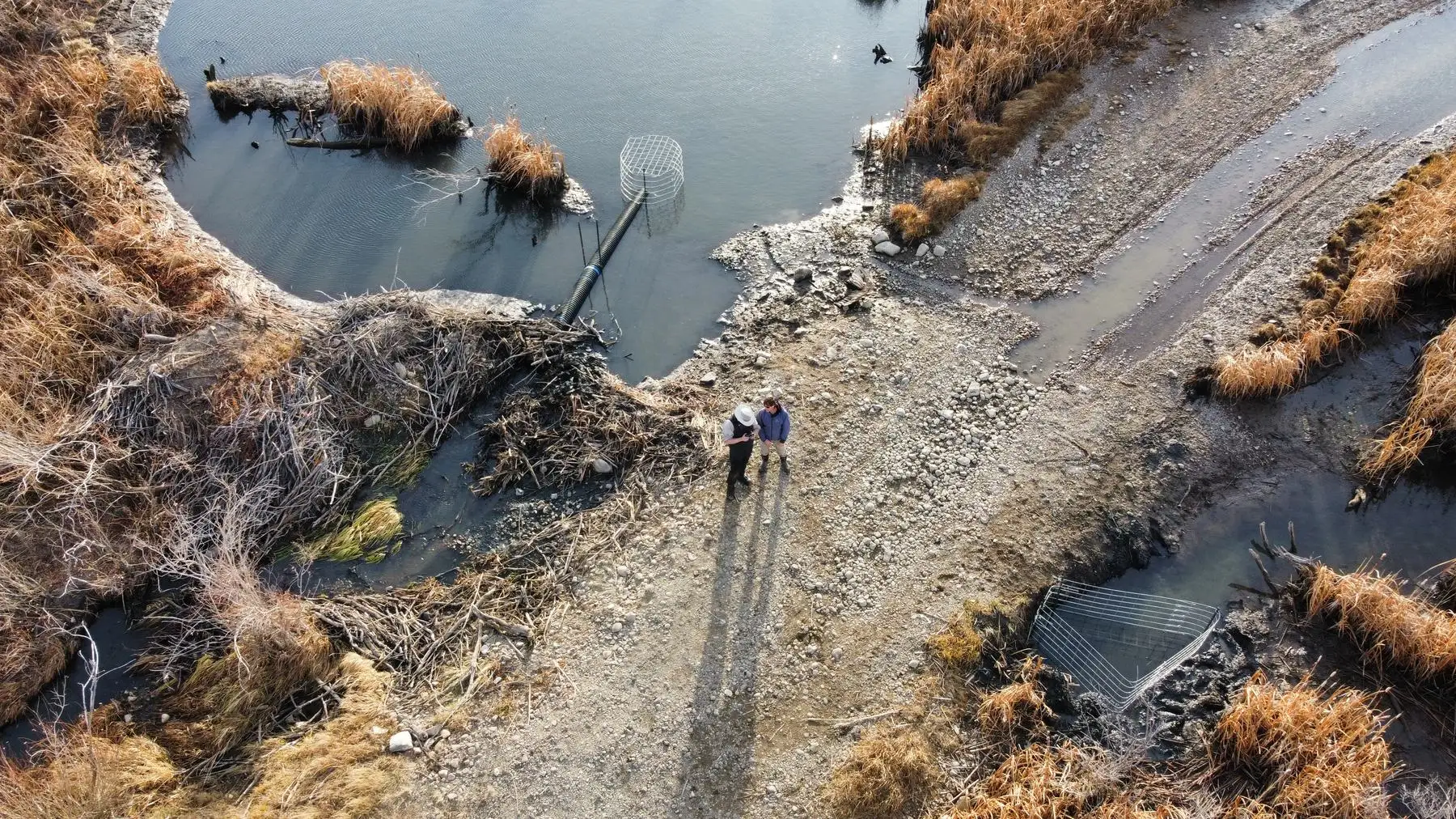 Deer CreekPond leveller on the left, culvert exclusion fence on the right. One crossing, both tools.
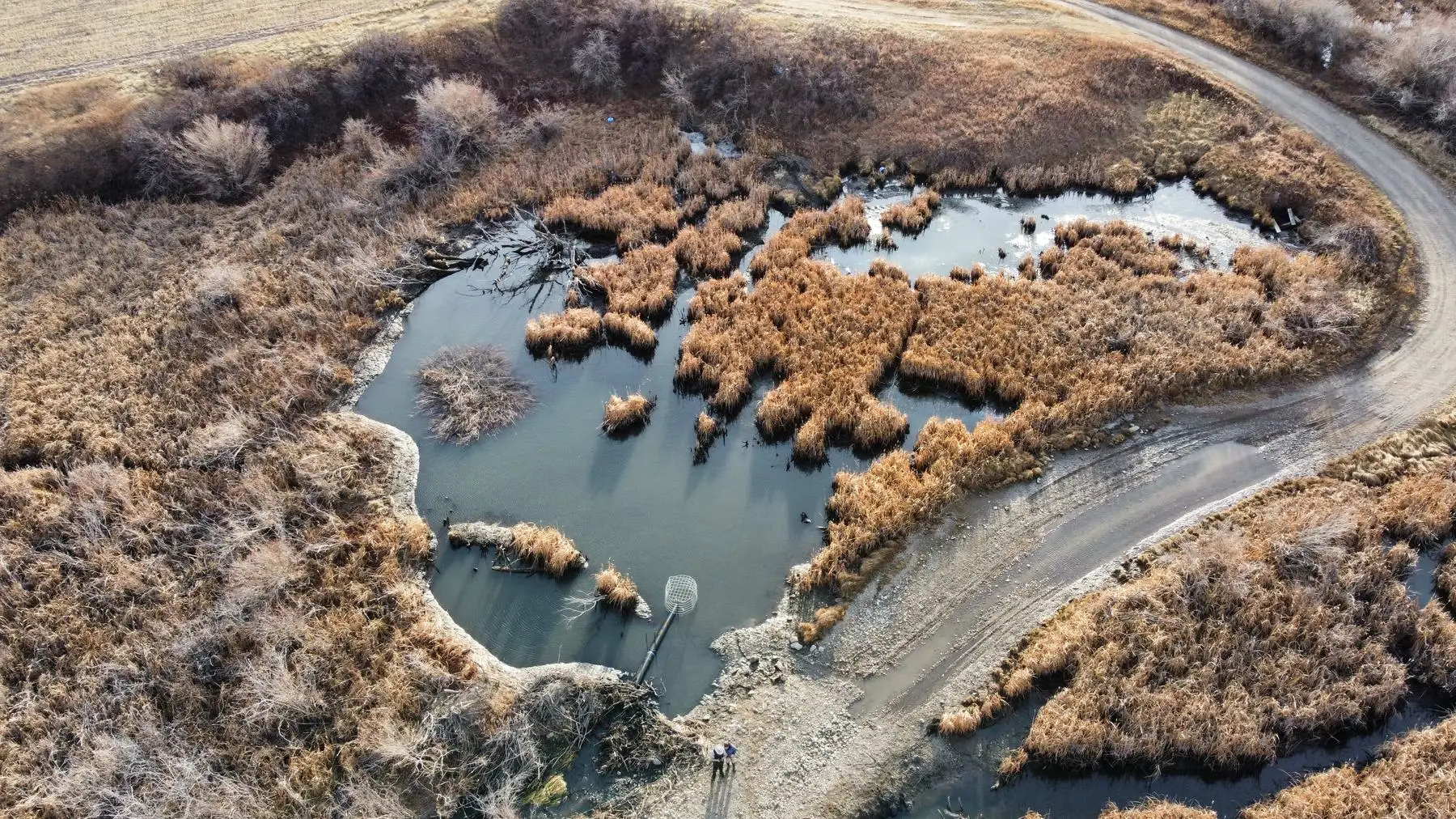 Deer CreekThe road after the install. Dry, and the pond is still there.
- Pond leveller intakeThe caged intake, out in open water where the beavers can't hear it.
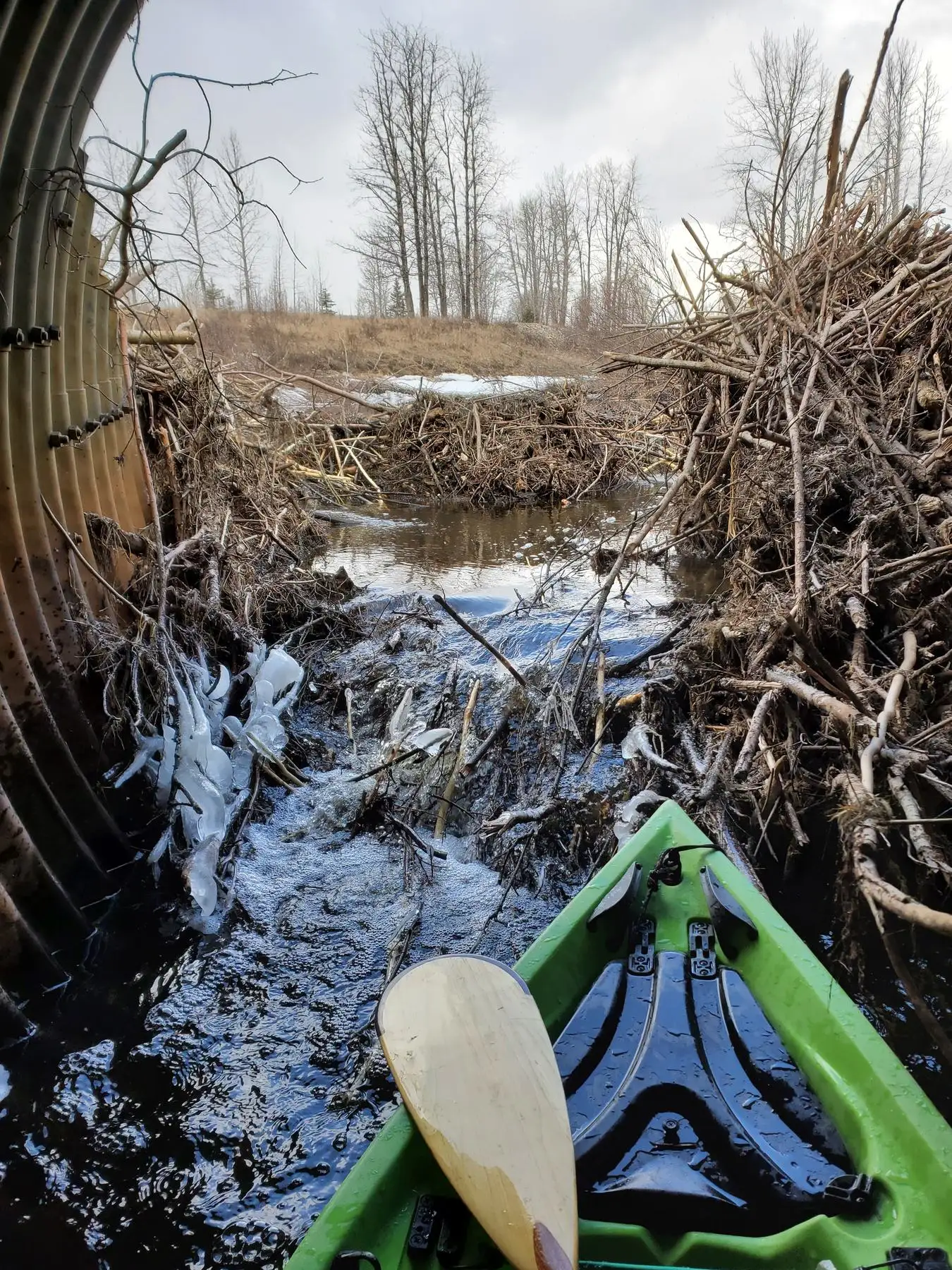 Bingley RdFrom inside the culvert. The fence holds the dam material back and the water comes through.
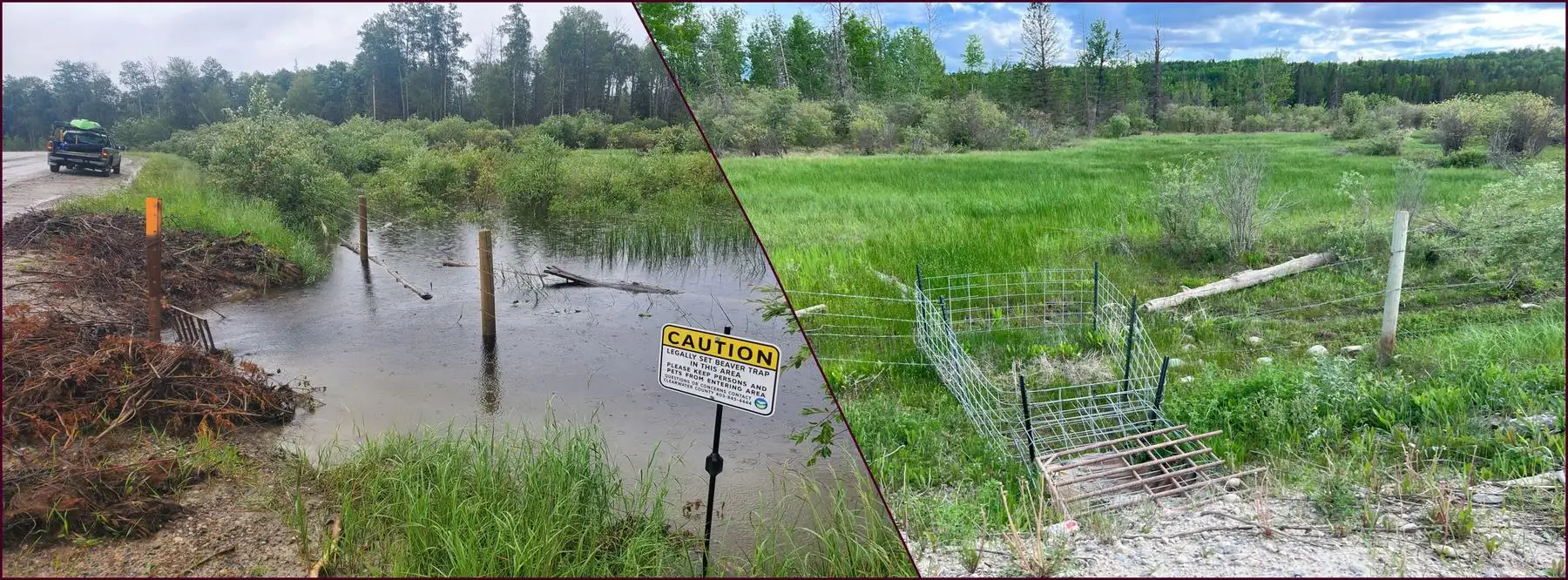 O'ChieseBefore and after the culvert exclusion fence.
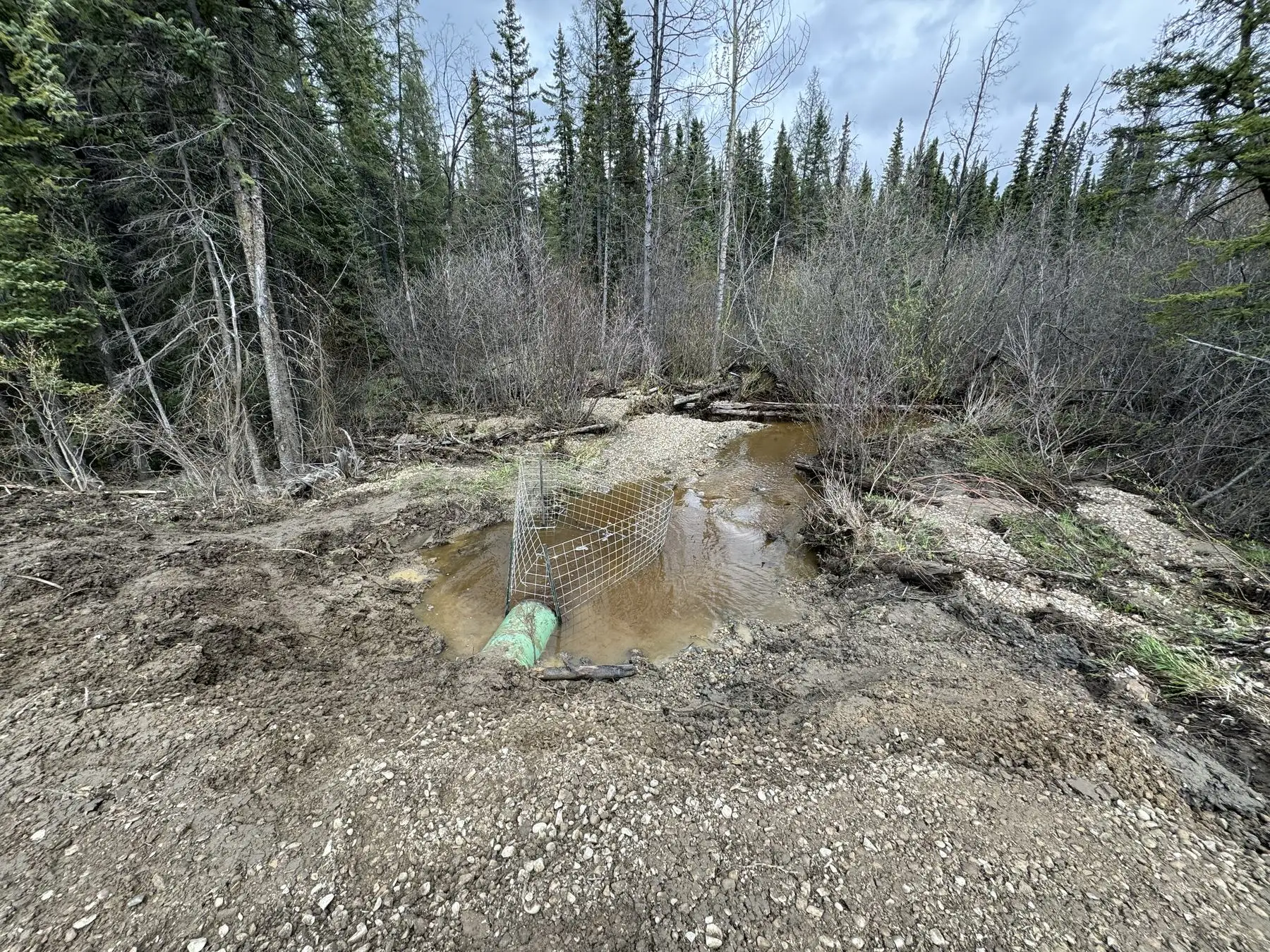 HPA3Protective fence at the culvert outlet. The beavers work somewhere else.
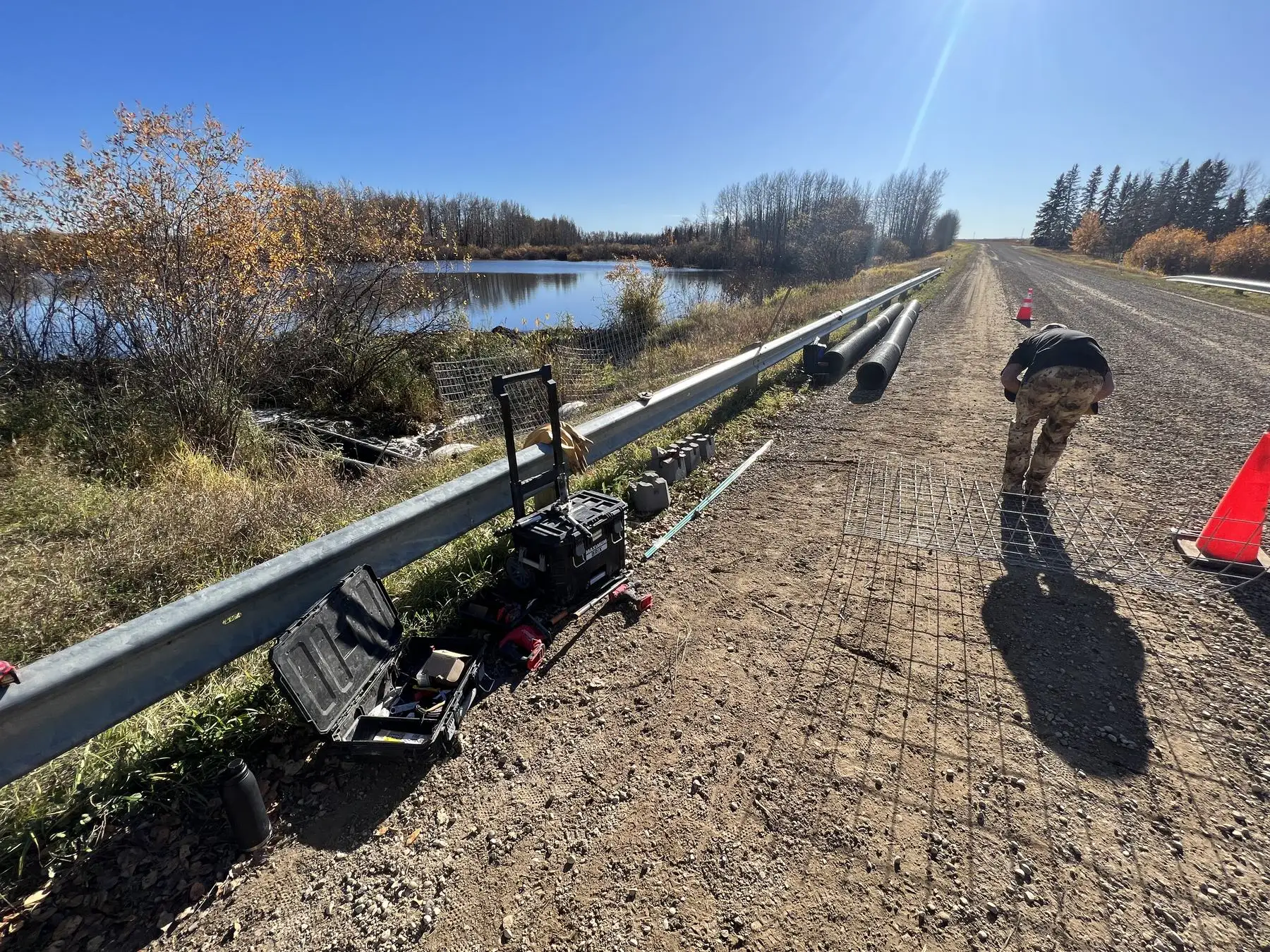 Flow device installGear on the road, pipe in the pond.
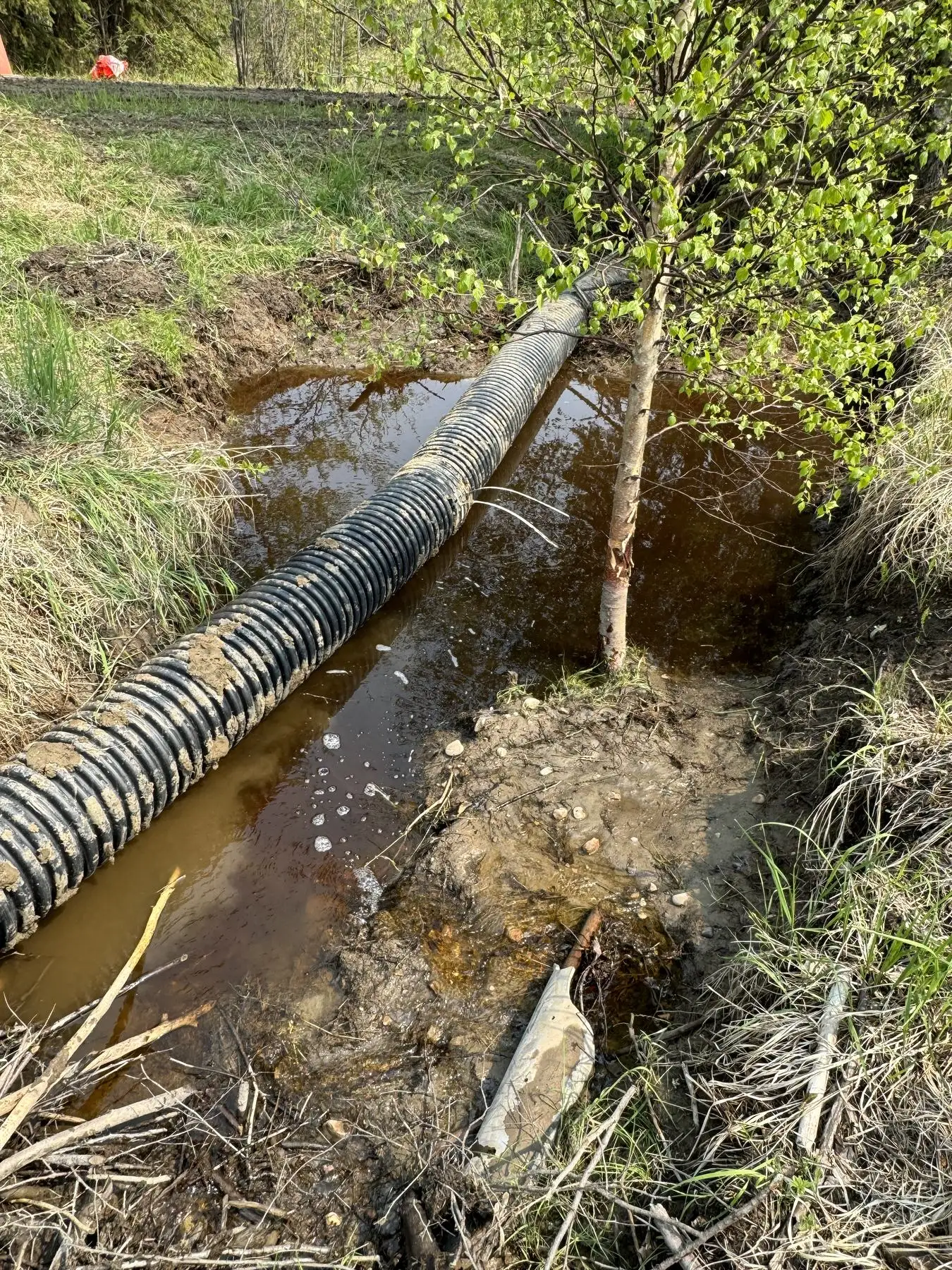 MBL fieldNew leveller beside the old one. The birch made it.
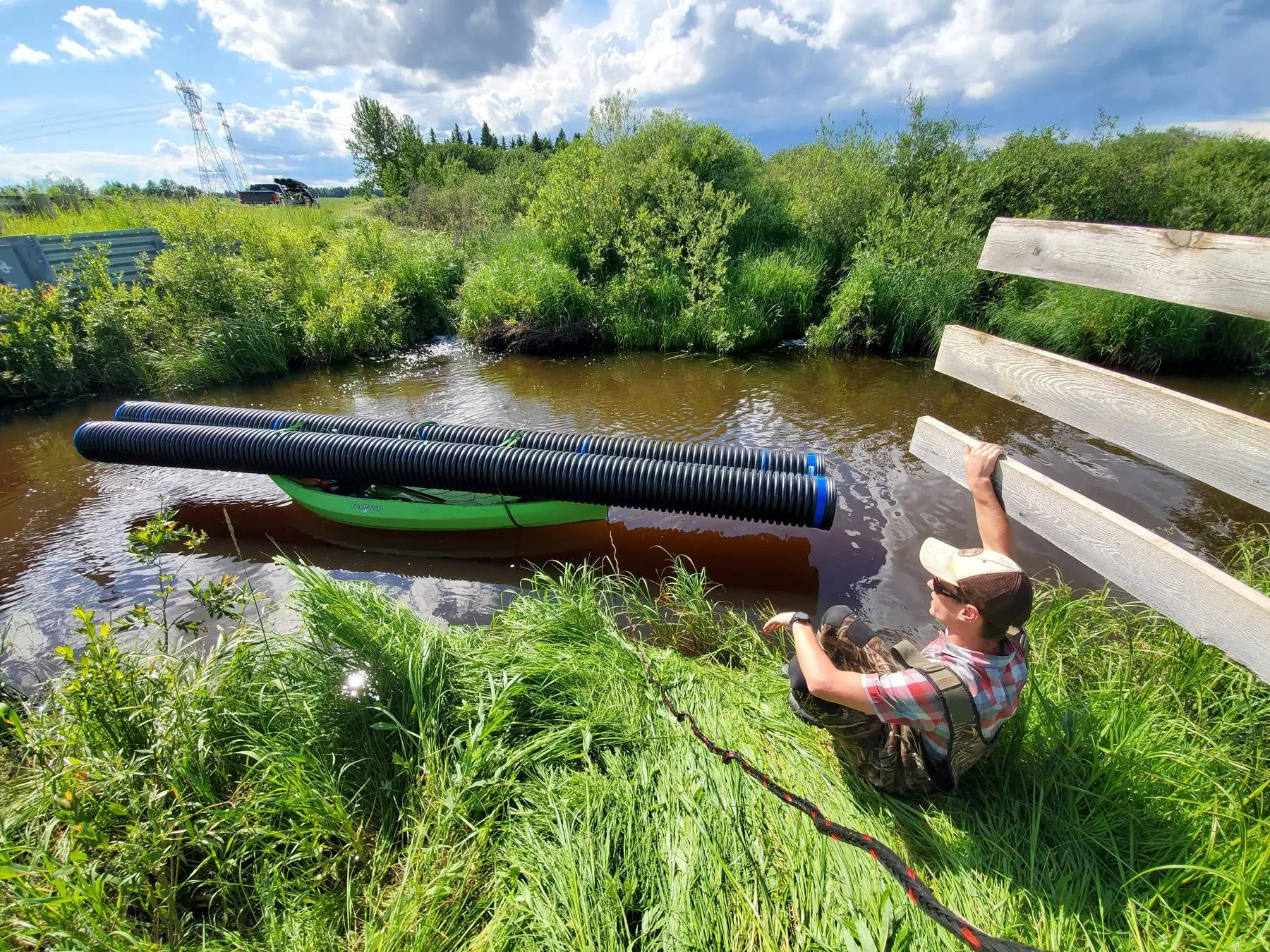 Delivery method: kayakThe pipe goes out to the dam the only way it can.
FAQ
Questions we get a lot.
Won't the beavers just plug the pipe?
Not if it's built right. The intake sits out in open water, away from the dam, where beavers can't sense the flow. That's the whole trick.
How long does a pond leveller last?
Years, with a seasonal check. The pipe and cage are built for ice and silt, and the parts that wear are the parts we can swap. Ask us for the maintenance schedule for your site.
Do you work outside Alberta?
Yes. We work anywhere in Canada. Travel is itemized in the plan, so you can see what a site visit costs before you book one.
What does it cost?
It depends on the water and the drive. A site visit comes with a written plan that puts a price on each option, so you decide before anything is built. The first 15-minute call is free.